
.png)
It only takes one failed payment to damage trust with a customer – this is critical for any business built on subscriptions, repeat services, and recurring revenue. Yet, fixing recurring payment problems may be simpler than you think.
On a recent webinar co-hosted with Triona Smith, GTM Director for Visa Europe Digital Products at Visa, Max Lamond, Senior Product Manager at Checkout.com shared: “Up to 10% of recurring payments declines stem from basic policy, security, and messaging formatting. Ultimately, they're self-inflicted errors that can be easily solved.”
It’s important that your customer understands the terms of the agreement when they are signing up to avoid confusion on future payments. Otherwise, your customer may contact their bank and request the payments are stopped, which interrupts your revenue flow and could lead to a chargeback if a payment dispute is raised. A clear agreement with your customer is foundational to merchant-initiated transaction (MIT) performance, too, as it provides the data you need to show the issuer you have cardholder consent.
Issuer confidence is the second most important piece: you must show the customer’s issuer that you have the correct permissions in place, you’ve included the correct data in the payment request, and that you’re following scheme guidelines.
What are MITs and what are the business impacts if they fail?
When you need to take payment from a customer for an ongoing service or subscription, you can use a merchant-initiated transaction (MIT) – so long as you have the correct agreement in place.
MIT examples
Here are the common types of merchant-initiated transactions you’re likely to come across as a merchant.
- Recurring transaction: this takes place on a defined schedule such as a monthly subscription to the gym or to a streaming service.
- Installment payment: for a consumer to make regular payments over a defined time period, such as making payments on an ecommerce purchase over 18 months.
- Unscheduled credential-on-file: this can be triggered by an event or usage, such as an auto top-up or after a hotel booking when additional services are added to the bill.
Broadly speaking, MITs are a reliable source of business revenue. Issuer approval rates are in the 90-percent range, according to Triona, so the proportion of declines you’re looking at is only a small fraction. The key to successful ongoing MITs is to set them up correctly in the first place and keep your customers aware of any agreed changes – see our API reference for technical requirements, and find more advice below.
Though small in number, failed MITs have big consequences: lost revenue, customer churn, operational burden, and potential damage to your reputation.
Here are the six tips you need to improve your MITs’ performance:
1. Correctly tag the transaction
The first transaction in the recurring payment series is the most important one. You need to get that right, honoring the customer agreement on the frequency, the value, and the type of payments.
The very first payment – which will be a customer-initiated payment – must be authenticated in areas where it’s mandated, such as Europe. So the authentication request signals to the issuer that you’re asking for a mandatory authentication challenge (which you use a 3DS service provider for). “That thread of information is carried through every future transaction, so it’s really important,” emphasized Triona.
Beyond authentication, you need to indicate to the issuer that this first transaction is intended to be used for future transactions. So, for successful authorization, you must include the following information in the authorization message:
- whether it’s an ecommerce purchase (with a financial value) or an account verification (with no financial value).
- that you are storing the consumer’s credential.
- the transaction type: e.g. recurring, installment or unscheduled credential-on-file.
It’s important that you tag the transaction with the correct charge type: recurring for charges with a fixed frequency and fixed amount. Then unscheduled for variable or ad-hoc payments, such as usage fees or variable installments.
Read our documentation on recurring payments on stored credentials for more guidance.
Example of the importance of correct tagging: $0.2M uplift
In February 2026, a Checkout.com payment expert noticed a major global digital media merchant had been tagging CITs with a recurring MIT tag, leading to a low acceptance rate with a European bank. Issuer Relationships Manager Anais Becquart reached out to the merchant to let them know how to fix the tagging, and the result was an accumulated total processing volume uplift of $0.2M between February and May 2026.
2. Link transactions to a previous payment
Subsequent MIT payments after the first CIT must be linked back to a successful previous transaction with the same payment credential. A good PSP will automate this process for you, in line with scheme requirements. However, if it’s not done correctly then you will see payment failures.
“ The original transaction ID is really important,” said Triona. “You capture it in the response from the issuer in that first consumer transaction, and then you present it in every MIT.”
To help with this, you can use the Visa MIT Service, which means Visa manages the storage and retrieval of the required original transaction ID.
3. Ensure data quality and consistency
Issuers will reject payments that trigger too many risk signals. This can happen if your payment requests are not following scheme guidance, and if you’re not adhering to best practices around payment security.
You may see a decline response “Exceeds approval amount,” which means your MIT contains information that is not consistent with the original setup. To avoid this, you should:
- consistently reference the MIT mandate you have with the customer
- ensure the correct expiry date is included with each transaction
- never charge a customer beyond the duration specified in the agreement
Another possible decline response is “Invalid merchant”. To help ensure issuer approval in such instances, Triona recommends naming consistency in the transaction data, the MIT agreement, and billing statements to help the issuer (and the customer) recognize the transaction.
Triona’s recommendations on data quality include:
- Use the same merchant descriptor across payment requests
- Payment terms need to match the original consent: accurately indicate if the payments are a fixed amount or if there will be an increase after a certain date
- If your agreement with the customer changes, apply any updates to the mandate before the next payment is submitted
Authentication is another reliable way to show the issuer you have customer consent and strong security. Checkout.com data shows that when the initial CIT is challenged with authentication data, this can improve MIT performance by up to 8% compared to frictionless 3DS.
4. Reduce churn with account updater services
A major cause of recurring payment failures is simply that the customer’s payment card is no longer valid – perhaps the card expired, it was lost or stolen and possibly replaced with a new one.
It’s a problem that can be hard to fix without the customer’s help – you may need to reach out by phone or email to let them know you need a new payment method. Most merchants stop providing the service or subscription at the point of payment failure, which is another source of inconvenience.
To avoid MITs declined with responses of “Lifecycle” and “Expired card” you can use Real-Time Account Updater (RTAU) to check for updated payment details.
“Everyone thinks real time is equivalent to batch,” says Max, “Well actually, we’ll contact VisaNet at the point of authorization, who will then check for the latest credential even before the payment has been submitted.”
This protects your relationship with the customer, minimizes operational burden, and ensures your payments can run smoothly in the background, despite a card replacement. Through Checkout.com, RTAU is also available for merchants to use proactively in advance of the MIT, so if their card comes back as out of service but no new credential is available, you can reach out to the customer for a new payment method and avoid a missed payment.
Our data shows an acceptance rate increase of 2.5% due to card-on-file updates with Visa Account Updater.
5. Use network tokens to update expired cards
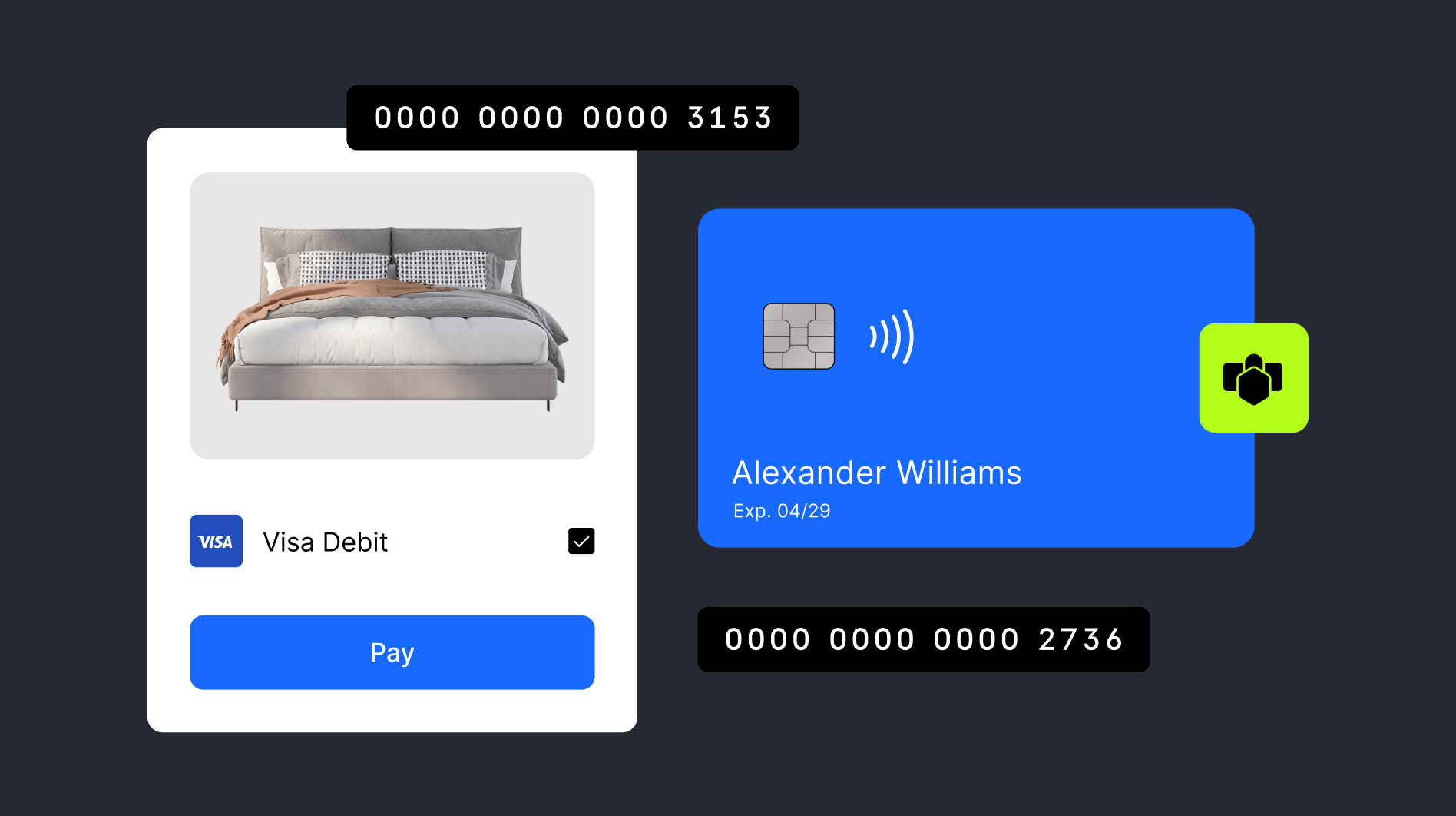
Using network tokens is another strong way to build issuer trust in your MIT.
At Checkout.com, we’ve seen acceptance rate increases of 3-6% depending on the MCC and region thanks to network tokens. Part of the reason is network tokens are bound to a specific merchant flow, so cannot be used in another context, helping reduce risk and create issuer trust. The issuer can use this information to help validate the payment for authorization. Tokenization is best practice according to scheme guidelines, too, as they protect the customer’s sensitive payment data from theft and misuse.
Network tokens are not mutually exclusive to account updater services. Max explains: “ Although a network token has its own lifecycle management using Visa Credential Enrichment Service, you can't provision or associate a network token to an expired FPAN [Funding Primary Account Number] or card. We've seen real impact on acceptance rates in the combination of using real-time account updater to update and ensure that the FPAN is up to date, and then go on to provision the network token.”
We already mentioned the importance of having the correct expiry date in the MIT. You can combine tokenization with Visa Credential Enrichment Services to automatically populate the latest expiry date on the card, and further reduce the likelihood of payment failures.
6. Set up Smart Dunning to recover ‘insufficient funds’ declines
Around 70% of MIT declines come down to insufficient funds – so it makes sense to treat this as a priority. When a customer’s payment fails due to lack of funds, it can be hard to know when to retry the payment. Each retry will cost you, so the stakes are high when it comes to economics.
Letting your customer know a payment is due is good practice. You can also use Smart Dunning from Checkout.com, which combines sophisticated machine learning and network data to retry the payment at a time when the customer is likely to have sufficient funds. It schedules retries at optimal intervals to maximize the chance of capture, respecting your financial margins and maintaining a smooth experience for your customer.
Smart Dunning is one of the ways in which Intelligent Acceptance works to increase the chances of your payments achieving authorization, including FPAN vs network token retry or changing the formatting of the ISO messages to suit issuer preferences.
Next steps on improving transaction success
It helps to consult with a trusted payment partner on strategies to improve your recurring payments success rate. Our documentation lists the advisable next steps on various Recommendation Codes you’ll see in Checkout.com payment responses, including advice on how to proceed with various soft declines, too.
Retries will cost you each time, so we advise you design your retry strategy with attention to detail on response messages.
You may also refer to Visa’s SCA for Remote Electronic Transactions Implementation Guide for further information.






%20thumbnail.png)

.png)


%20(1).png)