
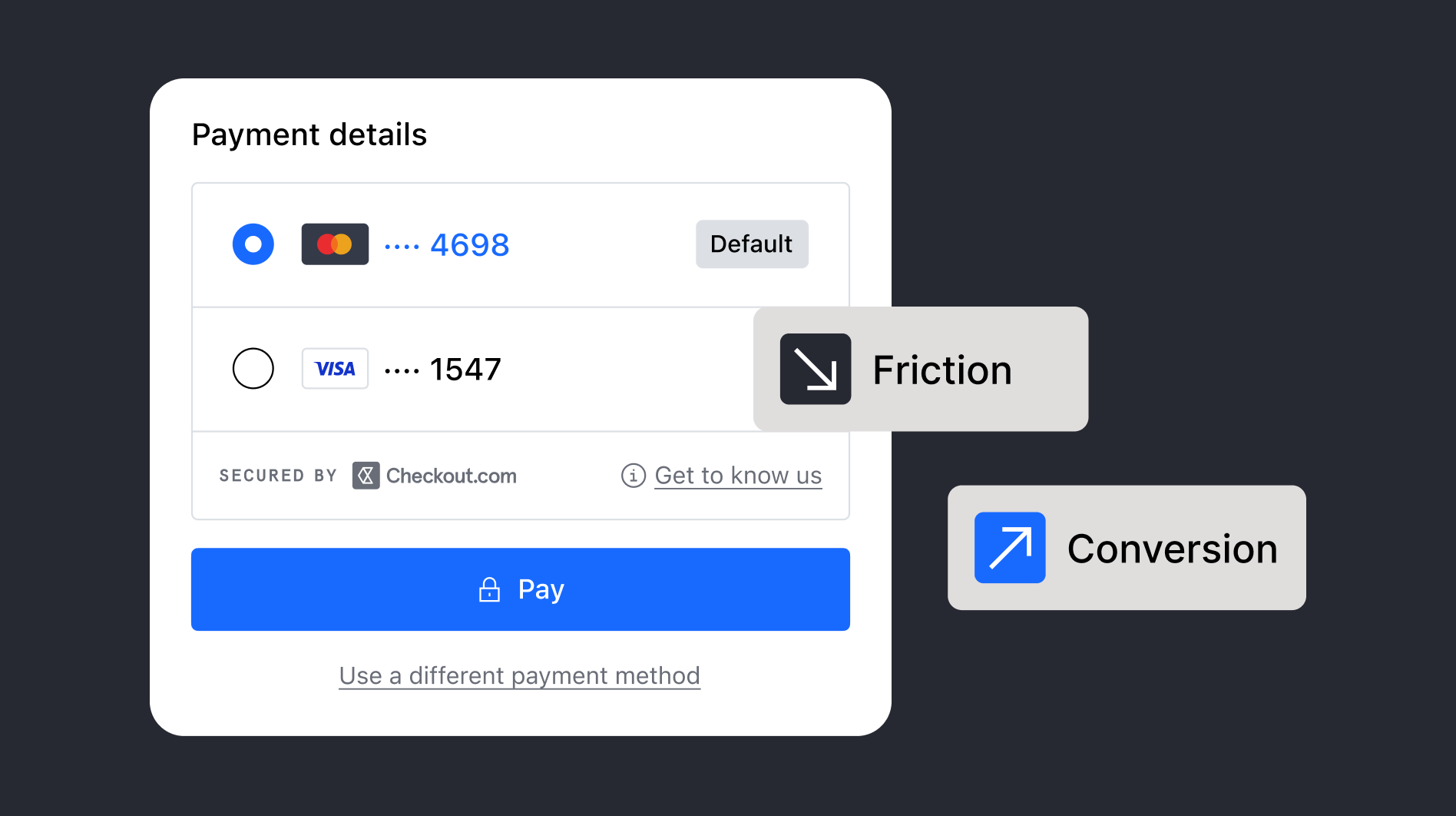
Friction is the series of barriers in between “I want this,” and “Payment complete.” It’s every moment of hesitation, unnecessary step, or confusing interaction that makes completing a purchase harder than it should be – and nudges the buyer closer to abandoning their cart.
Globally, the average cart abandonment rate hovers around a staggering 70%, according to the Baymard Institute. That means for every ten potential sales, seven walk away. While the reasons are varied, they often boil down to a checkout process that’s too complex, asks for too much effort, or fails to inspire trust.
Our own recent survey of global shoppers found two in five (40%) have abandoned a cart due to security concerns. When selling online, your customer cannot see you, and may never meet you in person. So it’s important to respect the trust that buyer is placing in you.
This comes down to two factors, with two main action points:
- Respect time: Build a quick and intuitive checkout
- Respect security: Show the customer their personal data is safe with you
Nail these, and you're well on your way to reducing friction and boosting conversions. The key areas to scrutinize are the efficiency of your checkout, robust fraud prevention, your range of payment methods, and communication on policies around returns, refunds, and delivery.
The trust deficit: Why customers hesitate at checkout
Our own research into the MENA region highlighted that feelings about payment safety are directly related to whether or not the customer trusts your brand.

Almost one in three (29%) consumers in MENA will lose trust in online payments if they’re unsure how safe it is.
Globally, uncertainty about the security of checkout is the number one reason consumers lose trust. Find out more in our full report: Trust in the Digital Economy.

Crafting a better journey for the customer
At Thrive Abu Dhabi, our flagship payments event in the Middle East, I hosted an in-depth discussion with industry leaders to investigate different approaches to reducing friction online.
Karim Malas, Global COO at CFI Financial Group, a platform for trading forex, commodities, and shares, emphasized the importance of a smooth onboarding process, even with regulatory requirements like KYC (Know Your Customer). "We started reducing the friction from the onboarding to make sure when the client reaches the payment, they’re not tired, they’re not exhausted with the requirements that we are asking," Karim shared. "So we introduced automated KYC systems to reduce the questions for the client and keep the journey short."
This principle extends directly to the payment stage. Karim continued, "After completing KYC, we want the customer to fund their account to start trading. We worked with Checkout.com to ensure we have everything to make the customer's life easier. For example, Apple Pay, Google Pay, and, lately, the most important one, Remember Me. All of these reduced friction with the client and gave us better conversion rates."
Saving payment details for faster checkout
A slow and complex payment process is a major deterrent, with one in five (21%) MENA consumers citing this as their top reason for losing trust and loyalty. And when half (50%) of consumers in the region are willing to save card details to reduce friction, it’s a crucial feature to offer.
Checkout.com’s Remember Me, a powerful extension of Flow, allows customers to securely save their payment details, email address, and phone number. The next time they shop with any merchant using Remember Me, they can securely authenticate their session, and complete their purchase in significantly fewer steps. Remember Me is designed to tackle cart abandonment and boost conversion rates by streamlining the checkout process.
Remember Me returning users complete payments 88% quicker than non-Remembr Me users – it takes just eight seconds, shaving a whole minute off the regular 71 seconds.
And for businesses? Adding a saved card feature like Remember Me can lead to an acceptance rate increase of up to seven percentage points for returning users.
For CFI Financial Group, this seemingly small convenience led to a 30% improvement in customer retention. This shows just how valuable checkout upgrades can be.
Discover more about CFI Financial’s journey with Remember Me.
Offering the best choice of payment methods
With one in four (24%) customers losing trust and loyalty if they can’t use their preferred payment method, merchants must take note. Offering one or two ways to pay is no longer enough.
Ashraf Atia, COO and Co-Founder of Zbooni, a social commerce platform, highlighted this. He said: "What's brought us a lot of success is a lot of the alternative payment methods in the different countries that we operate in. Our value to merchants is much higher when we can provide Amex, PayPal, Tabby, and Apple Pay all in one."
For maximum efficiency, Zbooni taps Checkout.com to provide these additional payment methods to its customers via Flow. “The more features we can offer, the better value we're giving to our merchants, the more orders we can close,” Ashraf noted. “So we look to our payment partners to provide those things, and we want them to manage it.”
Thanks to Flow, Zbooni is able to easily add or remove payment methods from one place, using one partner and one integration. This saves the effort of having to build multiple integrations, and communicate with various different parties. Flow, therefore, reduces payment friction for buyers and operational friction for businesses.
Learn more about Zbooni’s experience with Flow and Remember Me.
We know conversion impacts revenue. So we built Flow to optimize conversions across web and mobile. Your customers will see payment methods relevant to their location on a checkout page in their preferred language.

Addressing ‘false decline’ payment friction
The technology around payment declines can actually be a key point of friction for customers. When a legitimate payment is rejected, it’s known as a false decline – and it causes frustration. It could lead to customers abandoning their cart.
You can see how this is extremely costly at scale: if 3% of payments are falsely declined, that can mean huge amounts of lost revenue. Fortunately, businesses are not powerless against this issue. Proactive payment data handling strategies can make a significant difference – and prevent revenue loss.
You can make a number of technical adjustments to improve the chances of a payment being accepted. For instance, Intelligent Acceptance can ensure the payment messaging and routing is the best it can be. For international payments, using a local acquirer can also yield better results by aligning with regional banking preferences and risk appetites.
These are just a few approaches, and the optimal strategy often involves a combination of technical adjustments and a deep understanding of your transaction patterns. For a more comprehensive guide to identifying and mitigating false declines, our in-depth Acceptance Rate Playbook offers detailed insights and actionable steps.


.png)




%20thumbnail.png)

.png)

